
STM32H723 vs STM32H743: Which High-Performance STM32 Should You Choose?
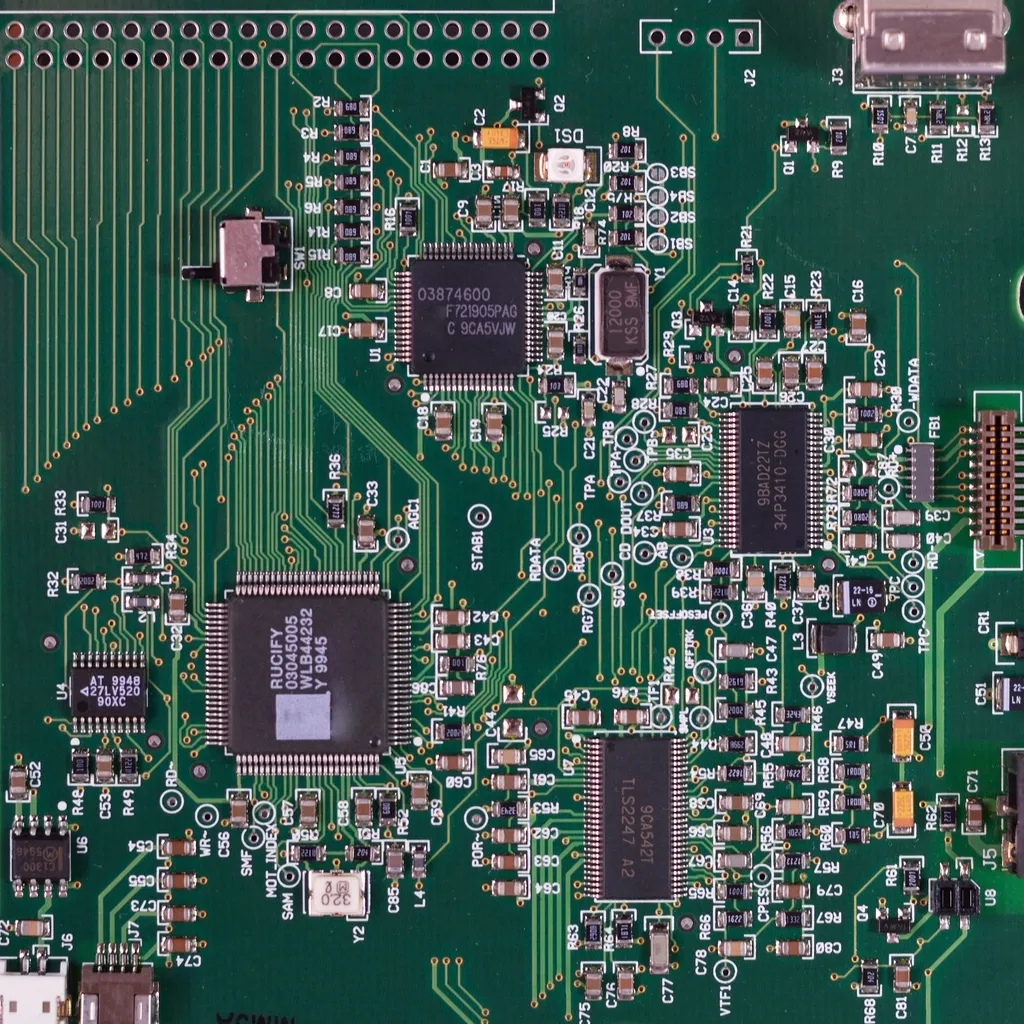
For several years the STM32H743 was the obvious answer when a design needed the most powerful single-core STM32 with internal flash. Then STMicroelectronics released the STM32H723, with a faster clock and a different mix of memory and peripherals, and the choice stopped being obvious. The two parts overlap in performance, pin count and price band, but they are not the same chip with a different speed rating. Each has features the other lacks.
This article compares them point by point: core speed, memory, connectivity, analog, graphics and power. It then turns the comparison into practical guidance, with a list of the situations in which each is the better choice.
The two parts in brief
Both belong to the STM32H7 series, ST’s high-performance microcontroller family, and both are built around a single Arm Cortex-M7 core with a double-precision floating-point unit.
The STM32H743 was among the first H7 devices. It runs at up to 480 MHz and carries a large amount of memory: up to 2 MB of flash and 1 MB of RAM. It has a broad peripheral set with an emphasis on graphics and multimedia.
The STM32H723 came later. It runs at up to 550 MHz, has up to 1 MB of flash and 564 KB of RAM, and shifts the emphasis toward connectivity, external memory and real-time control.
Comparison table
|
Feature |
STM32H723 |
STM32H743 |
|---|---|---|
|
Core |
Cortex-M7, single core |
Cortex-M7, single core |
|
Maximum frequency |
550 MHz |
480 MHz |
|
Flash (maximum) |
1 MB |
2 MB, dual bank |
|
RAM |
564 KB |
1 MB |
|
Cache |
32 KB instruction, 32 KB data |
16 KB instruction, 16 KB data |
|
Serial memory interface |
2 x Octo-SPI |
1 x Quad-SPI |
|
Ethernet |
10/100 MAC |
10/100 MAC |
|
CAN FD |
3 |
2 |
|
ADCs |
2 x 16-bit plus 1 x 12-bit fast |
3 x 16-bit |
|
Math accelerators |
CORDIC and filter math accelerator |
None |
|
Hardware JPEG codec |
No |
Yes |
|
High-resolution timer |
No |
Yes |
|
Core regulator |
Linear regulator |
Linear regulator |
These are the headline differences. Both lines come in several packages and memory sizes, so check the datasheet for the exact part number you intend to use.
Core speed and caches
The H723 has the higher clock rate, 550 MHz against 480 MHz, an increase of about 15 percent. It also has caches twice the size. For code that fits in cache the gain tracks the clock. For larger programs, or code running from external flash, the bigger caches reduce misses and the real-world gain can be larger than the clock ratio suggests.
A historical note on the H743: early production silicon was limited to 400 MHz, and later revisions raised this to 480 MHz. If you are maintaining an old design or buying older stock, check which revision you have, because clock and power settings differ between them.
Both cores have a double-precision floating-point unit and the DSP instruction set. Both have tightly coupled memory for deterministic execution of time-critical code.
Memory
This is where the H743 leads. It offers twice the flash and nearly twice the RAM.
Flash. The H743’s 2 MB is arranged as two banks. That allows a firmware update to be written to one bank while the application runs from the other, with a switch on the next reset. It is a convenient and robust way to implement field updates. The H723 has a single 1 MB bank, so a dual-image update scheme must fit both images in half the space or place one in external memory.
RAM. One megabyte of RAM lets the H743 hold a full frame buffer for a modest display, large network buffers or sizable data sets without external memory. The H723’s 564 KB is still generous for a microcontroller, but graphical applications will usually add external RAM.
External memory. Here the H723 is stronger. It has two Octo-SPI interfaces, each with up to eight data lines, against the H743’s single Quad-SPI interface with four. Octo-SPI flash and RAM are faster, and having two ports means flash and RAM can each have their own. Both devices also have a flexible memory controller for parallel memories.
In short, the H743 gives you more memory inside the chip, and the H723 gives you faster access to memory outside it.
Connectivity
The two are close. Both have a 10/100 Ethernet MAC, USB On-The-Go, SD card interfaces, and a long list of UART, SPI, I2C and audio ports.
The H723 has three CAN FD controllers where the H743 has two. In vehicle gateways, agricultural machinery and industrial machines with several CAN networks, the third channel can remove the need for an external controller.
The USB arrangements differ in detail. Check the datasheets if you need two USB ports at once or a particular combination of full-speed and high-speed operation.
Analog and control
The H743 has three 16-bit analog-to-digital converters. The H723 has two 16-bit converters and a third 12-bit converter designed for speed. For control loops, where a short, predictable conversion time matters more than resolution, the fast 12-bit converter is the more useful tool. For precision measurement on three simultaneous channels, the H743’s arrangement is better.
The H723 adds two hardware accelerators that the H743 lacks. The CORDIC unit computes sine, cosine, arctangent and related functions in a fixed, short time. The filter math accelerator runs digital filters and control-loop compensators. Both are aimed squarely at motor control and digital power, and they free the core for other tasks.
The H743, for its part, includes a high-resolution timer with sub-nanosecond edge placement, intended for digital power conversion and lighting. The H723 does not have it. If your power stage needs that resolution, this alone may decide the matter.
Graphics and multimedia
Both lines include an LCD-TFT display controller and a camera interface, and both can drive a graphical user interface.
The H743 adds a hardware JPEG codec, which compresses and decompresses images far faster than software and suits camera products and interfaces with many photographic assets. Combined with its larger internal RAM, that makes the H743 the more natural platform for display-heavy designs that aim to avoid external memory.
The H723 handles graphics well when paired with Octo-SPI flash and RAM, and its higher clock speed helps software rendering.
Power
Both lines covered here use an internal linear regulator for the core supply, and both operate from 1.62 V to 3.6 V. Each has sibling lines with an internal switching regulator for better efficiency: the H725 and H735 on one side, and versions of the dual-core devices on the other.
At full speed a Cortex-M7 at these frequencies draws a few hundred milliamps. In a sealed enclosure that heat has to go somewhere, so thermal design deserves attention with either part. If efficiency is critical, consider the switching-regulator siblings.
Packages and pin compatibility
Both lines are available in LQFP packages with 100, 144 and 176 pins and in several BGA packages. The H723 line also includes smaller packages.
The two are not guaranteed to be drop-in replacements for each other. The pinouts are similar in the common packages, but some pins differ in function, and the alternate-function assignments do not all match. ST publishes migration guidance between H7 lines. If you want one board to accept either part, compare the pinouts in the configuration tool before layout and restrict yourself to the functions they share.
Software compatibility
Both devices are supported by the same STM32CubeH7 software package, the same configuration tool and the same development environments. Application code written against the hardware abstraction layer moves between them with modest effort. The areas that need attention are the clock setup, the memory layout in the linker script, the serial memory driver if you use Quad-SPI on one and Octo-SPI on the other, and any use of peripherals present on only one device.
Which should you choose?
Choose the STM32H723 when:
- Raw processing speed is the priority.
- You need three CAN FD channels.
- The design uses fast external Octo-SPI memory, or needs separate ports for flash and RAM.
- You are building a motor drive or control system that benefits from the CORDIC unit, the filter accelerator and the fast converter.
- Your application fits in 1 MB of flash and about half a megabyte of RAM, or will use external memory anyway.
- You are starting a new design and want the newer line.
Choose the STM32H743 when:
- You need 2 MB of internal flash, or dual-bank flash for straightforward firmware updates.
- You need close to 1 MB of internal RAM and want to avoid external memory.
- The product handles JPEG images and would benefit from the hardware codec.
- You need the high-resolution timer for digital power or lighting.
- You need three 16-bit converters.
- You are extending an existing H743 design.
Three example designs
A CAN-to-Ethernet gateway for agricultural machinery. The product bridges three CAN FD networks to an Ethernet backbone and logs data to an SD card. Firmware is around 400 KB. The H723 is the fit: three CAN FD controllers on the chip, plenty of speed for packet handling, and no need for the extra flash.
A handheld inspection camera with a touch display. The product captures images, compresses them, shows them on a 480 by 272 display and stores them. The H743 is the fit: the JPEG codec handles compression, 1 MB of RAM holds the frame buffer and working images without external memory, and dual-bank flash makes updates over USB safe.
A two-axis servo drive. The product runs two field-oriented control loops at high rates and talks to a controller over Ethernet. The H723 is the usual pick, since the CORDIC unit and fast converter shorten each control cycle. If the power stage needs very fine PWM resolution at high switching frequency, the H743’s high-resolution timer becomes the deciding factor, and the control math is done in software.
In each case the decision follows from one or two features that only one of the parts has. Listing those for your own product is the fastest way to choose.
Other lines worth knowing
- STM32H733: the H723 with hardware cryptography.
- STM32H725 and H735: the H723 and H733 with an internal switching regulator.
- STM32H730: a value line with 128 KB of flash, designed to run from external memory.
- STM32H753: the H743 with hardware cryptography.
- STM32H750: a value-line counterpart to the H743 with 128 KB of flash.
- STM32H745 and H747: dual-core devices with a Cortex-M4 beside the Cortex-M7.
If your product needs secure boot with accelerated cryptography, look at the lines with a 3 as the second digit of the number. If it needs two cores to separate real-time control from communication, look at the dual-core lines.
Sourcing
Both families have seen uneven availability, and exact codes vary in stock. Decide on package, flash size and temperature grade, then check supply for that precise part number. For the H723 with 1 MB of flash in the 144-pin LQFP, Verified Electronics is an STM32H723ZGT6 distributor that lists the device and sends parts for third-party testing.
Frequently asked questions
Is the STM32H723 faster than the STM32H743? Yes. It runs at up to 550 MHz against 480 MHz, and has larger caches.
Which has more memory? The H743, with up to 2 MB of flash and 1 MB of RAM, against 1 MB and 564 KB.
Are they pin-compatible? Similar, but not guaranteed identical. Check the pinouts for your package.
Can I move firmware from one to the other? Yes, with changes to clock setup, memory layout and any peripherals that differ.
Which is better for motor control? The H723, because of its math accelerators and fast converter. If you need the high-resolution timer, the H743.
Which is better for a graphical interface? The H743 if you want to avoid external RAM or need JPEG decoding. The H723 with external Octo-SPI memory is also a capable platform.
Does either have Ethernet built in? Both have an Ethernet MAC and need an external PHY.
Summary
Also read: Understanding 1.6T DR8 OSFP224 Optical Transceivers: Technology, Architecture, and Applications
The STM32H723 and STM32H743 are both single-core Cortex-M7 microcontrollers at the top of ST’s range, with different strengths. The H723 is faster, has three CAN FD channels, two Octo-SPI ports and math accelerators for control. The H743 has twice the flash in two banks, nearly twice the RAM, a JPEG codec and a high-resolution timer. Choose the H723 for speed, connectivity and control, and the H743 for memory, graphics and digital power. Verify the details against current ST documentation for the specific part numbers before you commit.