
Understanding 1.6T DR8 OSFP224 Optical Transceivers: Technology, Architecture, and Applications
The rapid growth of artificial intelligence (AI), high-performance computing (HPC), and large-scale data centers is pushing network infrastructure toward higher bandwidth, lower latency, and improved energy efficiency. As GPU clusters continue to expand from hundreds to thousands of accelerators, traditional 400G and 800G optical solutions are facing increasing pressure to deliver sufficient bandwidth and scalability. To address these challenges, the industry is moving toward the next generation of optical interconnect technologies, including 1.6T OSFP224 modules, which provide a significant leap in data transmission capacity while supporting the demanding requirements of modern AI networks.
Compared with previous-generation optical transceivers, 1.6T solutions are designed to support higher-density network architectures and reduce the number of optical connections required in large-scale deployments. By combining advanced modulation technology, higher-speed electrical interfaces, and optimized optical designs, 1.6T DR8 OSFP224 optical transceivers are becoming an important building block for next-generation Ethernet networks and AI data center infrastructure.
The transition to 1.6T optical technology is not simply an upgrade in bandwidth. It represents a fundamental change in how data centers design their network fabrics. As switch ASICs continue to evolve and AI workloads demand faster communication between GPUs, optical transceivers must provide higher throughput while maintaining manageable power consumption and thermal performance.
What Is a 1.6T DR8 OSFP224 Optical Transceiver?
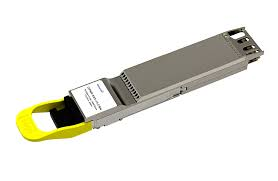
A 1.6T DR8 OSFP224 optical transceiver is a high-speed optical module designed to provide 1.6 terabits per second (Tbps) of Ethernet connectivity. The module adopts the OSFP224 form factor and DR8 optical architecture, enabling high-bandwidth transmission through multiple parallel optical lanes.
The term “DR8” refers to an optical architecture based on eight data lanes operating at a specific transmission rate. In a 1.6T DR8 design, the module typically uses eight optical channels, with each lane supporting 200Gb/s transmission. Together, these eight lanes achieve a total aggregate bandwidth of 1.6Tbps.
The OSFP224 interface is an evolution of the OSFP family designed for future high-speed networking applications. Compared with earlier optical module generations, OSFP224 provides increased electrical bandwidth capability to support next-generation switch platforms and networking equipment. This makes it suitable for AI clusters, cloud computing environments, and hyperscale data centers that require extremely high-density connectivity.
Understanding the Technology Behind 1.6T DR8 Modules
PAM4 Modulation for Higher Data Rates
One of the key technologies enabling 1.6T optical transmission is PAM4 (Pulse Amplitude Modulation 4-level). Unlike traditional NRZ modulation, which carries one bit per symbol, PAM4 uses four signal levels to transmit two bits per symbol. This allows the industry to achieve higher data rates without requiring a proportional increase in signal frequency.
By using PAM4 modulation, 1.6T optical transceivers can deliver higher bandwidth while maintaining compatibility with existing high-speed networking architectures. However, PAM4 also introduces additional signal complexity, requiring advanced digital signal processing (DSP), improved signal integrity management, and precise optical component design.
Silicon Photonics Technology
Many advanced 1.6T optical modules are based on silicon photonics (SiPh) technology. Silicon photonics integrates optical components onto silicon substrates, allowing manufacturers to achieve higher integration levels and improved manufacturing scalability.
Compared with traditional optical designs, silicon photonics can help reduce module size, improve power efficiency, and support higher-speed optical communication. As data center operators continue to increase network bandwidth, silicon photonics is expected to play an increasingly important role in supporting future 1.6T and beyond optical interconnect solutions.
Dual MPO-12/APC Optical Interface
The optical interface design is another important factor in 1.6T DR8 modules. Many 1.6T DR8 transceivers use dual MPO-12/APC connectors to support multiple parallel optical channels.
The MPO-12/APC interface provides a high-density connection solution for short-reach data center applications. Combined with single-mode fiber (SMF), these modules can achieve transmission distances suitable for large-scale AI clusters and data center networking environments.
Architecture of 1.6T OSFP224 Optical Networks
The architecture of modern AI data centers is becoming increasingly dependent on high-performance optical networks. In traditional data center networks, servers communicate through switches using optical transceivers to connect different network layers. However, as AI training workloads require massive data exchange between GPUs, network bottlenecks can significantly impact overall system efficiency.
1.6T OSFP224 optical transceivers are designed to support next-generation switch platforms by providing higher bandwidth per port. A single switch equipped with 1.6T optical interfaces can deliver significantly greater aggregate throughput while reducing the number of physical connections required.
This higher port bandwidth enables more efficient scaling of AI clusters, allowing data centers to build larger GPU fabrics without dramatically increasing network complexity. The combination of high-speed switching ASICs, advanced optical modules, and efficient network architectures creates a foundation for future AI infrastructure.
Applications of 1.6T DR8 OSFP224 Optical Transceivers
AI Data Centers and GPU Clusters
The primary application area for 1.6T optical transceivers is large-scale AI infrastructure. Training advanced AI models requires continuous communication between thousands of GPUs, making network performance a critical factor in overall computing efficiency.
High-bandwidth optical modules help reduce communication bottlenecks between compute nodes and switches, enabling faster data exchange and improved GPU utilization. As AI models continue to grow in size, 1.6T connectivity will become increasingly important for supporting distributed training environments.
Hyperscale Cloud Networks
Cloud service providers are also driving demand for higher-speed optical connectivity. Large cloud platforms require networks that can handle massive amounts of data traffic from AI services, cloud applications, and enterprise workloads.
By deploying 1.6T optical solutions, hyperscale data centers can increase network capacity while improving rack-level and data center-wide connectivity efficiency.
High-Performance Computing Systems
Beyond AI, HPC environments such as scientific research, simulation, and advanced analytics also require extremely high-speed communication between computing nodes. 1.6T DR8 OSFP224 optical transceivers provide the bandwidth and scalability needed for these demanding applications.
Conclusion: 1.6T Optical Technology Shapes the Future of Data Center Networking
The emergence of 1.6T DR8 OSFP224 optical transceivers represents a major milestone in the evolution of data center connectivity. By combining OSFP224 interfaces, PAM4 modulation, silicon photonics technology, and high-density optical architectures, these modules provide the bandwidth required for next-generation AI and cloud infrastructure.
As AI workloads continue to expand and network requirements become more demanding, the transition from 800G to 1.6T optical connectivity will accelerate. 1.6T DR8 OSFP224 modules will play a critical role in enabling scalable, efficient, and high-performance data center networks for the future.