
Is Forex Trading Just Rebranded Gambling? The Similarities and Differences
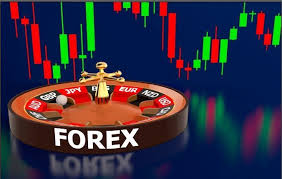
What does the following scenario mean? You put money on a predicted outcome. If your prediction is right, you walk away with more money. If it’s wrong, you lose your stake. Sounds exactly like gambling, right? But do you know what it also describes? Forex trading.
Now, this raises a big question. If both gambling and forex involve risking money based on predictions, is the latter really any different from the former? Or is it just gambling in a more polished, rebranded form? In this article, we will explain what forex trading truly entails and outline the differences and similarities that it actually has with gambling.
What is Forex Trading?
Forex trading is simply the buying and selling of currencies. Traders buy one currency while simultaneously selling another, hoping the value will move in their favor. In other words, currencies are always traded in pairs, like:
- EUR/USD (Euro vs US Dollar)
- GBP/USD (British Pound vs US Dollar)
- USD/JPY (US Dollar vs Japanese Yen)
So when you trade forex, you’re essentially making a call on one currency against another. For example, if you believe the euro will rise against the dollar, you buy EUR/USD. If you’re right, you make a profit. If you’re wrong, you take a loss.
Now, what makes forex trading different from just randomly guessing is that good traders don’t rely on luck, at least, not in theory. They use market analysis, which involves studying economic indicators like inflation, interest rates and employment data. They also use charts and price patterns, which is called technical analysis. The goal is to make informed decisions about where the market might move next.
But even with all the analysis and strategy, the market is still unpredictable. Prices can move quickly, and no outcome is ever guaranteed. That means every trade carries risk, and this is where the comparison to gambling starts creeping in.
Similarities and Differences Between Forex and Gambling
On the surface, forex and gambling can look almost identical. Both involve putting money on the line, both depend on outcomes you can’t fully control, and can result in profits or losses within a short time. But when you look a little deeper, there are also key differences between the two.
Let’s break it down, starting with the similarities:
Similarities
- Both involve risk: In both forex trading and gambling, there’s no guarantee of success. You can make money, but you can just as easily lose it.
- Both rely on predictions: In forex, you are predicting the movement of a currency pair. In gambling, you’re predicting the outcome of a game. Both activities require you to make a call on what will happen next.
- Uncertainty is always present: No matter how much analysis you do in forex or what kind of strategy you use, the market can still move against you. The same applies in gambling.
- Emotions play a big role: Fear, greed, and overconfidence can influence decisions in both forex trading and gambling, and in each case, they lead to poor choices.
- Potential for quick profit and losses: You can make quick money with both forex and gambling, but you can also lose your money even faster.
Differences
- Skill vs. chance: Although some games like poker require a bit of skill, online gambling is still largely based on luck, especially in titles like roulette or slot machines. Forex trading, on the other hand, involves thorough analysis.
- Market structure: Forex is a global financial market driven by real economic activity, trade, investment, and monetary policy. Gambling platforms, casinos specifically, are structured games designed with a built-in advantage for the house.
- Platform: Gambling usually takes place in online casinos like Pari App and physical shops. Forex trading, on the other hand, is done through brokerage platforms like MT4, MT5 or Exness, which connect traders to the global currency market.
- Access to information: Forex traders usually have access to vast amounts of data, including economic indicators, central bank policies, global news, etc., which can help inform their decisions. In gambling, outcomes are usually independent of such data.
- Risk management tools: Forex trading allows for strategies like stop-loss and take-profit orders, position sizing, and diversification. These tools can help traders manage and limit risk. This is not the case in gambling, because once you place your bet on a casino game, you just have to wait for the outcome, and there’s no way to reduce your risk.
- Long-term vs. short-term: Successful forex trading often involves consistency, discipline, and long-term strategy. Gambling is mostly more short-term and outcome-focused.
Verdict: Is Forex Trading Just Rebranded Gambling?
On a factual basis, forex trading is not in any way rebranded gambling. Yes, the similarities we discussed earlier are real. Both involve risk, uncertainty, and the possibility of losing money. But when you look deeper, the differences make it clear that forex trading operates on a completely different foundation.
Forex trading is a structured financial activity. It is built on data, analysis, economic factors, and risk management strategies. Gambling, on the other hand, is primarily based on chance, and the outcomes are often designed to favor the house. So while they may look similar on the surface, the reality is this: forex trading is not gambling. It’s a skill-based activity that can be approached professionally.
That said, even though forex trading itself isn’t gambling, it is very possible for someone to treat it as such. When you stake money on an uncertain outcome with little to no analytical backing, driven by luck, emotion, or impulse, that’s no different from pulling the lever on a slot machine and hoping for the best. So when someone approaches forex trading in the same way, they’re not really “trading” anymore. This would involve signs like:
- Taking trades based on guesses rather than analysis
- Entering the market on a “feeling” or hunch
- Ignoring risk management completely
- Overtrading without a clear strategy.
In this approach, decisions are not based on any form of structured thinking. There’s no technical analysis, and no understanding of market fundamentals. It is just impulse and hope.


