
Why Local Trade Relationships Matter More in a Market Cornwall’s Size
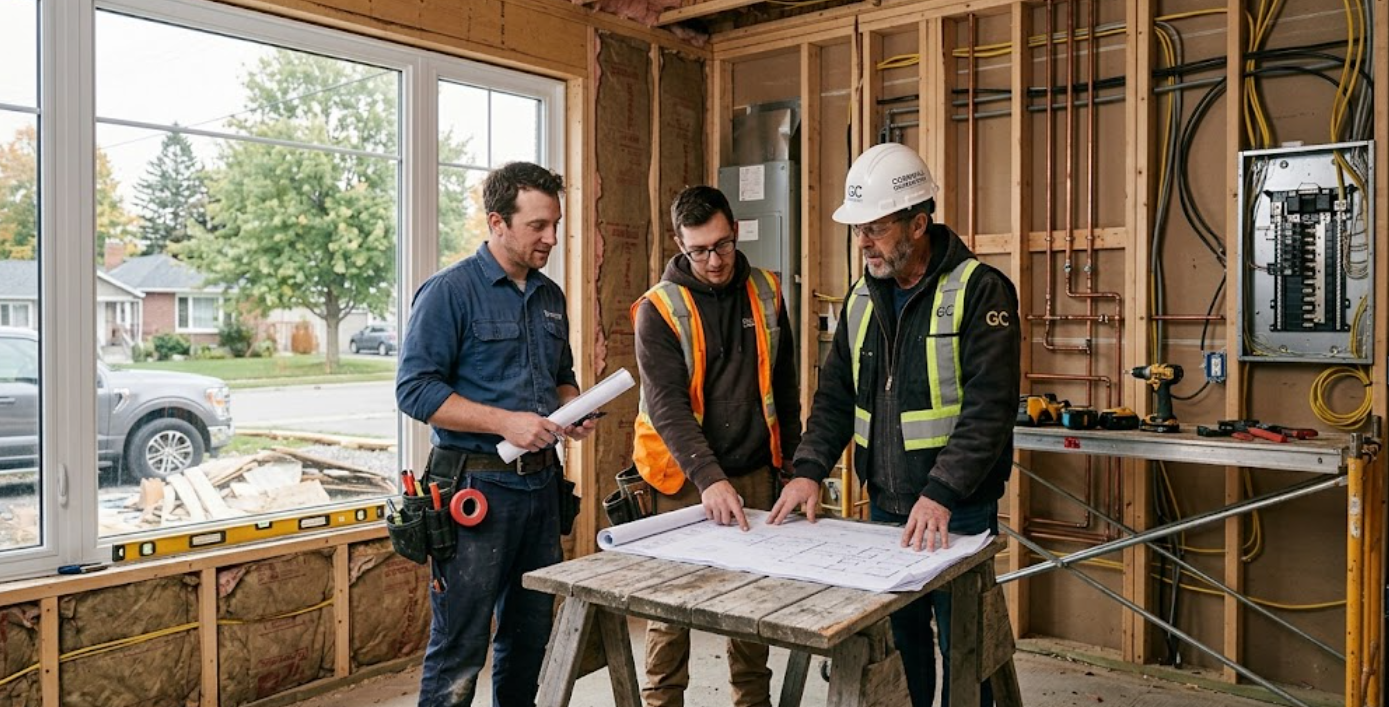
Cornwall’s relatively compact trade market means a general contractor Cornwall homeowners hire depends heavily on established subcontractor relationships built over years of repeated work together, since a smaller regional pool of electricians, plumbers, and specialized tradespeople means these working relationships matter more here than they might in a larger metro market with dozens of interchangeable options for every specific trade. A contractor with genuine, established relationships across this local trade network typically secures more reliable scheduling and consistent quality than one working with unfamiliar subcontractors assembled fresh for each individual project, since trust and communication built through repeated collaboration translates directly into smoother project coordination.
This relationship-based reality matters practically for homeowners comparing contractors, since a general contractor’s actual value extends well beyond their own direct labor into how effectively they coordinate the full team of specialized trades a typical renovation actually requires. A contractor without strong local trade relationships might struggle to secure timely scheduling from electricians or plumbers during busier seasons, creating delays that ripple through an entire project’s timeline regardless of how skilled the general contractor’s own direct work might be in isolation from this broader coordination challenge.
Why Proximity to Ottawa and Montreal Affects Material Sourcing
Cornwall’s location between Ottawa and Montreal gives local contractors meaningful sourcing flexibility that a more geographically isolated market wouldn’t offer as readily. Specialty materials or fixtures not readily stocked locally can often be sourced from either larger metro market without the extended shipping delays a more remote location might face, since both cities sit within reasonably convenient driving distance for picking up or coordinating delivery of specific items a project requires beyond what local suppliers typically carry.
This geographic advantage matters most for renovation projects involving less common material choices, custom fixtures, or specialty finishes that smaller local suppliers don’t stock as standard inventory. A contractor familiar with sourcing options across this broader Ottawa-Montreal corridor can often secure specific materials more efficiently than one relying purely on local supply chains, particularly for projects where a homeowner has specific aesthetic preferences that push beyond what standard local inventory typically offers without additional sourcing effort.
How Trade Sequencing Actually Determines Project Timeline

A general contractor’s core function extends beyond performing construction work directly into sequencing the full range of trades a project requires in the correct order, since plumbing and electrical rough-in needs to happen before walls close, and finishing work can’t reasonably begin until earlier structural and systems work has passed inspection. Poor sequencing, whether from inexperience or inadequate coordination with subcontractors, creates cascading delays where each trade waits unnecessarily on work that should have already been completed before their portion of a project could reasonably begin.
Homeowners evaluating contractors benefit from asking directly about how a specific contractor approaches this sequencing and coordination challenge, since strong sequencing expertise often matters more for actual project timeline than any single trade’s individual skill level in isolation. A contractor who sequences trades efficiently, anticipating exactly when each specialist needs to be on site relative to other work’s progress, keeps a project moving considerably more smoothly than one who schedules trades reactively, addressing each phase only once the previous one has already fully concluded rather than planning ahead for how each stage connects to the next.