
How Astrocade Helps You Build and Publish a Game Without a Development Team
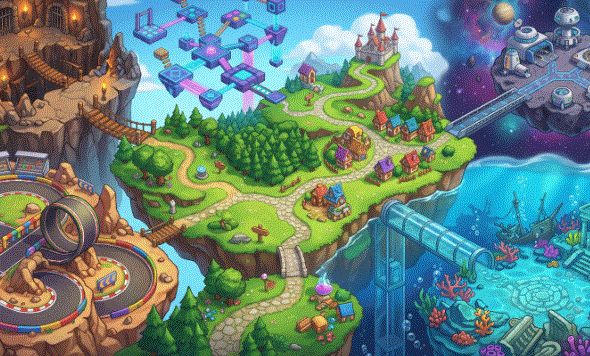
The traditional image of game development involves a studio full of specialists. Programmers writing backend logic. Artists producing assets. Designers balancing mechanics. QA teams breaking builds on purpose. Project managers keeping everyone aligned. For decades, that picture was accurate. Making a game worth playing required either a team or an extraordinary amount of time spent becoming competent across every discipline alone.
That picture is now outdated. A new kind of creator is shipping real, playable, published games without any of that infrastructure. No team. No office. No six-figure budget. Just a clear idea, the right platform, and enough creative energy to see it through.
Astrocade is the platform making that possible at a level nothing else currently matches.
The Old Model Is Broken for Independent Creators
Traditional game development tools were designed for teams. Unity and Unreal Engine are powerful, genuinely impressive pieces of software. They are also built around the assumption that someone on your team knows how to use them properly. Documentation runs thousands of pages. Community forums answer questions that beginners do not even know how to ask yet. The learning investment required before you can build something functional is measured in months, sometimes years.
For a solo creator or a small group of friends with a game idea they are excited about, that model is not just inconvenient. It is a genuine barrier that kills projects before they start.
Astrocade was built with a completely different philosophy. The question it was designed to answer is not how do we give developers more power. It is how we give creative people the ability to build and publish a game without needing a development team to do it.
That shift in the design question produces a completely different kind of platform.
What Astrocade Actually Gives You
Understanding why Astrocade works for solo creators means looking specifically at what it provides across every stage of the creation process.
At the idea stage, the platform’s AI game maker tools help you move from concept to early prototype faster than any traditional method allows. You are not spending weeks setting up a project environment before you can test whether your core idea is actually fun. You get to that answer quickly and adjust accordingly.
During development, the no-code game maker infrastructure means your decisions stay creative rather than technical. You are making choices about how the game feels, what the player experiences, and what makes each session rewarding. The platform handles the underlying logic that would otherwise require a programmer.
When it comes to assets and presentation, AI assistance fills gaps that would traditionally require an art team. Visual elements, environmental design, and interface components that used to demand specialized skills are now accessible to creators who have a clear visual direction but not necessarily a design background.
At the publishing stage, Astrocade removes the distribution problem entirely. Your game goes live inside a platform with an active player community already looking for new experiences. You are not launching into an empty room and hoping traffic eventually finds you.
The complete picture across all four stages is what makes Astrocade genuinely different. Most tools solve one part of this pipeline well. Astrocade connects all of it.
Astrocade Versus Building Alone on Traditional Tools
The comparison is worth making directly because many creators considering their options spend time weighing Astrocade against engines like Unity, GameMaker, or GDevelop.
Here is the honest breakdown:
- Traditional engines give you maximum technical control and are the right choice if your goal is a career in professional game development. They are the wrong choice if your goal is to publish a finished, playable game without spending a year learning prerequisites first.
- Astrocade gives you creative control inside a system designed to get you to a published game as efficiently as possible. The technical ceiling is intentionally managed so that creative momentum stays high throughout the process.
- AI game maker capabilities on Astrocade compress what used to be multi-week development cycles into significantly shorter iteration loops. You test ideas faster, improve them faster, and reach a publishable state faster.
- No-code game maker tools eliminate the single most common reason game projects stall. Most abandoned solo projects die not because the creator lost interest in the idea, but because they hit a technical wall they did not have the background to climb.
- Game maker online access means your entire creative workflow lives in the browser. No installation, no version conflicts, no hardware requirements that force you to upgrade your setup before you can build.
For a creator without a development team, Astrocade is not a compromise. It is the smarter choice for the goal you are actually trying to achieve.
Speed Per Step: A Lesson in Mechanic-First Design
One game on Astrocade that demonstrates how a single well-executed mechanic can carry an entire experience is Speed Per Step. It is a fast-paced 3D obstacle course built around one idea: your character gets faster with every single step you take.
That escalating speed mechanic changes everything about how the game feels as a session progresses. What starts as a manageable run across disappearing platforms becomes increasingly intense as momentum builds and reaction time shrinks. Players collect coins and unlock pets along the way, with the long-term goal of reaching 10,000 meters sitting out there as a genuinely compelling target.
The design lesson here is significant. Speed Per Step did not need a hundred mechanics or a sprawling open world to create real engagement. It needed one mechanic executed with enough commitment that players find it nearly impossible to stop once they get moving. For solo creators thinking about scope and focus, this game is a useful reminder that depth beats breadth almost every time.
How Solo Creators Are Finishing Games on Astrocade
The pattern among creators who successfully publish on Astrocade tends to follow a recognizable shape, and understanding it helps set realistic expectations for what the process actually looks like.
Start narrow. The creators who finish are almost always the ones who resisted the temptation to build something enormous on the first attempt. A focused, complete experience beats an ambitious, unfinished one every time. Astrocade’s fast prototyping tools make it easy to validate a narrow concept quickly before committing to a larger build.
Use AI assistance at every friction point. The AI game maker tools are most valuable not during the easy creative phases but during the moments when you are stuck. Stuck on a mechanic that is not quite working. Stuck on a visual element that does not match your vision. Stuck on a progression system that feels flat. Using AI assistance to push through those friction points keeps momentum alive.
Publish earlier than feels comfortable. The instinct to keep polishing before sharing is almost universal among first-time creators, and it is almost always wrong. Real player feedback from an actual audience tells you more in a week than months of solo playtesting. Astrocade’s publishing flow makes early release low-stakes enough that there is no good reason to delay.
Iterate based on what players actually do. Not what they say they want, but what their behavior tells you. Players who keep replaying a specific section are telling you something. Players who drop off at a particular moment are telling you something else. The feedback loop between creator and player on Astrocade is short enough to act on this information meaningfully.
The Skills You Already Have Matter More Than You Think
One of the things that holds creators back from attempting game development is the assumption that the skills required are completely foreign to what they already know. That assumption is almost always wrong.
If you have spent time thinking seriously about what makes games engaging, you understand player psychology better than most junior developers. If you have created content in any form, you understand pacing, presentation, and audience attention. If you have run a community, you understand what keeps people coming back versus what drives them away.
These are genuine game design skills. They are also skills that no-code game maker tools and AI assistance can amplify significantly. The platform does not ask you to become a programmer. It asks you to bring your creative judgment and gives you the infrastructure to act on it.
Making games on Astrocade is not about suppressing what you already know in favor of technical learning. It is about applying what you already know inside an environment designed to execute on creative decisions efficiently.
Publishing Without a Marketing Team
One of the underappreciated advantages Astrocade offers solo creators is the built-in audience problem getting solved at the platform level. Independent game developers who build outside of connected ecosystems face a brutal reality after finishing their game: nobody knows it exists.
Getting a game discovered through external channels requires consistent social media presence, community building across multiple platforms, press outreach, and often paid advertising. For a solo creator who has already invested significant time in building the game, adding a full marketing operation on top of that is genuinely exhausting.
When you build a game and publish it on Astrocade, the distribution problem changes shape. The platform’s player community is actively browsing for new games to try. Your game appears in that space immediately. You are not responsible for generating all of the initial traffic yourself.
That does not mean promotion is irrelevant. Sharing your game with your existing network still matters. But the starting point is dramatically better than launching into a completely cold environment with no infrastructure behind you.
From First Idea to Published Game: What the Timeline Actually Looks Like
Creators who have not been through the process often imagine it takes far longer than it does on a platform designed for accessibility and speed. The reality on Astrocade is more encouraging.
A focused game concept with a clear mechanic and a defined scope can move from initial idea to published state in weeks rather than months. The AI assistance compresses the technical phases. The no-code environment removes the prerequisite learning period. The online platform eliminates the setup and configuration time that traditionally slows early progress.
This does not mean every game should be rushed. It means the time you invest goes into creative decisions rather than infrastructure problems. That is a fundamentally more motivating experience, and it is a significant part of why creators who start on Astrocade tend to actually finish what they start.
The Real Reason Most Game Projects Never Ship
Unfinished game projects are not primarily a talent problem or even a technical problem. They are a momentum problem. Every time a creator hits a wall they cannot get through alone, momentum drops. Every dropped momentum cycle makes the next one harder to restart. Eventually the project sits untouched long enough that starting fresh feels more realistic than finishing.
Astrocade’s design addresses this at the root. The no-code game maker removes the most common walls. The AI assistance provides a path through the ones that remain. The fast publishing flow gives you a finish line close enough to stay motivated throughout the build.
Create a game on a platform built for this reality and the momentum problem changes character entirely. The walls are shorter. The path forward is clearer. The finish line stays visible.
For any creator who has started a game project and not finished it, that difference is worth taking seriously. The problem was probably never your idea or your commitment. It was the environment you were trying to build in.